
Support in Sound: How Music Therapy Is Bringing Dementia Care to a Rural Community
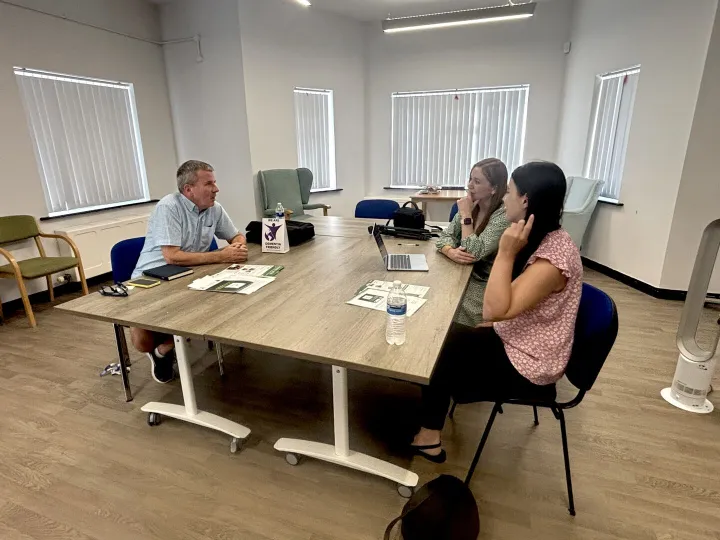
For people living with dementia and their loved ones in rural communities, access to specialist support can be hard to come by. A new project, Support in Sound, is aiming to change that, bringing ten weeks of music therapy to the village of Tarporley, alongside a research study exploring the impact it has on wellbeing.
We spoke to Dr Kiera Kenny, researcher at the Cambridge Institute for Music Therapy Research at Anglia Ruskin University, about the project, the science behind it, and what she hopes it will achieve.
Meet the researcher
Dr Kenny's route into music therapy research began in psychology. She recently completed a PhD focused on music therapy in dementia care, and her work centres on non-pharmacological approaches to supporting people living with dementia.
"Research has shown that behavioural and psychological symptoms of dementia could be addressed using non-pharmacological treatment, such as music interventions and music therapy," she explains.
What is Support in Sound?
Support in Sound is a music therapy research project taking place in the community of Tarporley. Over ten weeks, people living with dementia and their companions will take part in group music therapy sessions, with a research evaluation carried out before, during, and after the programme.
The aim, Dr Kenny says, is twofold: to bring a meaningful, accessible service into a rural community, and to explore whether it can support people's quality of life, wellbeing, and social connections.
"The aim is to bring the music therapy support to Tarporley, which is a rural community, to provide access to a meaningful group service within the community," she says. "We also hope that the group can help support people's quality of life, wellbeing, and social connections by bringing people together with lived experience of dementia and participating in music therapy."
Why music?
Music therapy is well established as a way of connecting with people living with dementia in ways that other approaches sometimes can't. According to Dr Kenny, music is a powerful tool for connection, one that can stimulate memory, language, attention, and motor skills.
Group sessions bring people together to use music as a way of communicating and expressing emotion, whether through singing, playing instruments, or simply listening together. These shared activities encourage teamwork and self-expression, and can help reduce isolation by creating a supportive, enriching space where people can share experiences and connect with others.
Supporting pairs, not individuals
One distinctive feature of Support in Sound is that it works with dyads – a person living with dementia and their companion, attending sessions together rather than separately.
"One of the aims of this research is ultimately to enhance social connection within rural communities," Dr Kenny explains. "I wanted to run these sessions for those living with dementia and their companions so that both people can access the support and come together for an enriching experience, ultimately to support one another, enjoy time together, and enhance connections."
Who's taking part
The project is recruiting around seven dyads from Tarporley and the surrounding villages. To take part, one person in each pair must have a clinical diagnosis of dementia, and both must be willing to complete surveys on health and wellbeing before, during, and after the programme, as well as commit to all ten weeks of sessions, where possible, which will run across autumn and winter this year.
Inside a session
Sessions will be taking place at the community centre in Tarporley, where a music therapist will work with the dyads as a group. Activities include singing, music-making, playing instruments, and conversation, all designed to encourage social interaction and bring people together.
Measuring success
Alongside delivering the sessions, Dr Kenny is leading the research evaluation. This involves collecting data on quality of life, wellbeing, loneliness, and depression, which will help identify any trends associated with taking part in music therapy. She'll also be conducting interviews with participants who are willing to share their experiences, helping build a fuller picture of what the project has achieved.
Looking ahead
For Dr Kenny, who is local to the area herself, Support in Sound is just the beginning. Her hope is that the project can grow into a long-term, ongoing service for the area.
"What I would like to see, as a local person, is to have regular, consistent, group music therapy sessions permanently within the community," she says. "This service should be available for the long term, that is the ultimate goal."
She believes the need is a lasting one. "We live in a rural community. Activities are so important, meaningful and enriching experiences are so important. To have this health and wellbeing initiative available in the village consistently, I think, is a really good addition to our community to help to support the needs of people living with dementia and their companions in the village."
What success looks like
Above all, Dr Kenny hopes participants come away from Support in Sound with something to hold on to.
"I really hope that people find the process and project enriching for them. I want them to come out of each session and gain something from it, enjoy the sessions, enjoy taking part in research, enjoy coming together in the community, and have a positive experience."
Recruitment for the project will start in mid-September. If you or someone you know would benefit from this project, get in touch with Kiera by emailing kiera.kenny@aru.ac.uk.